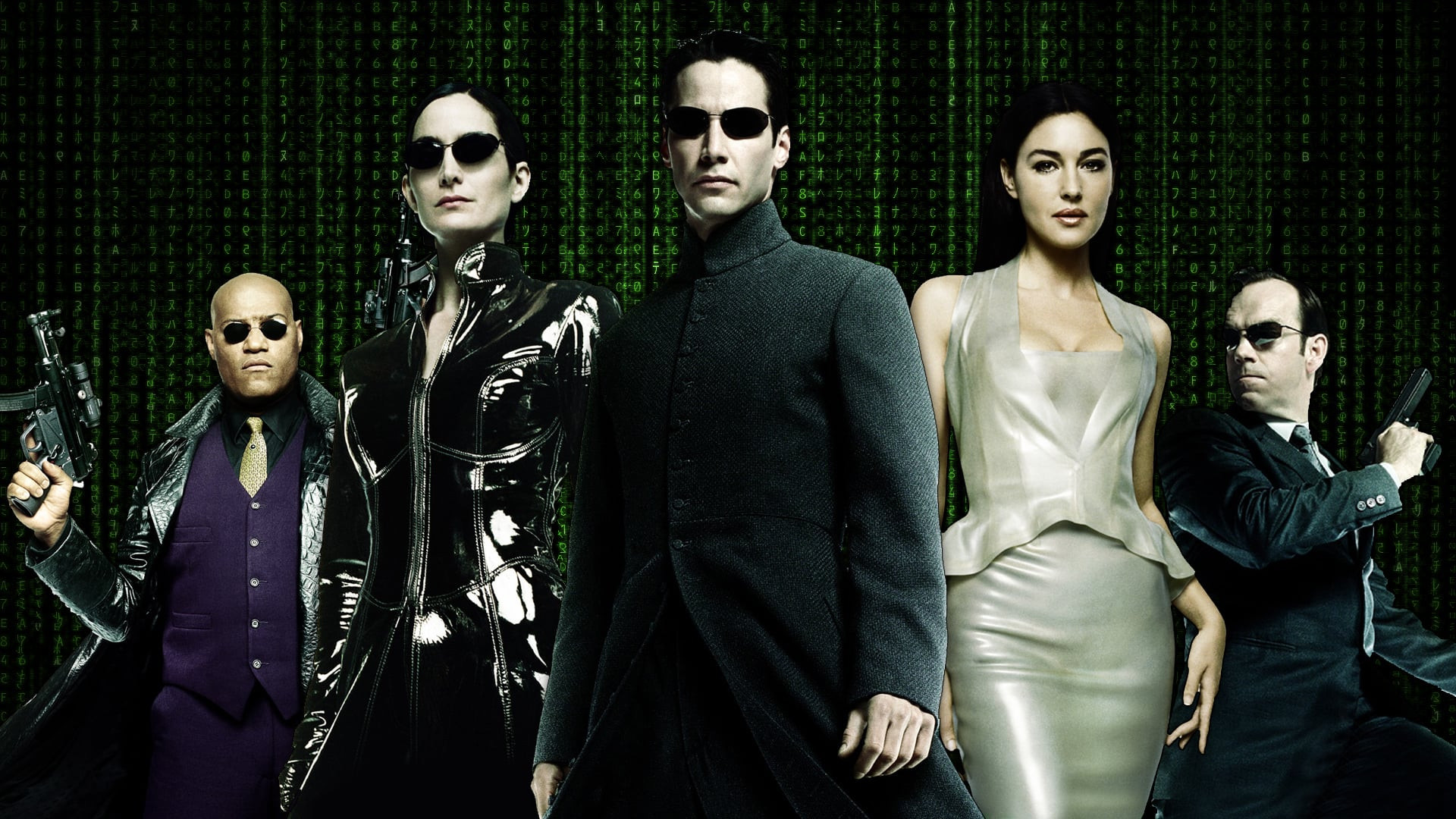
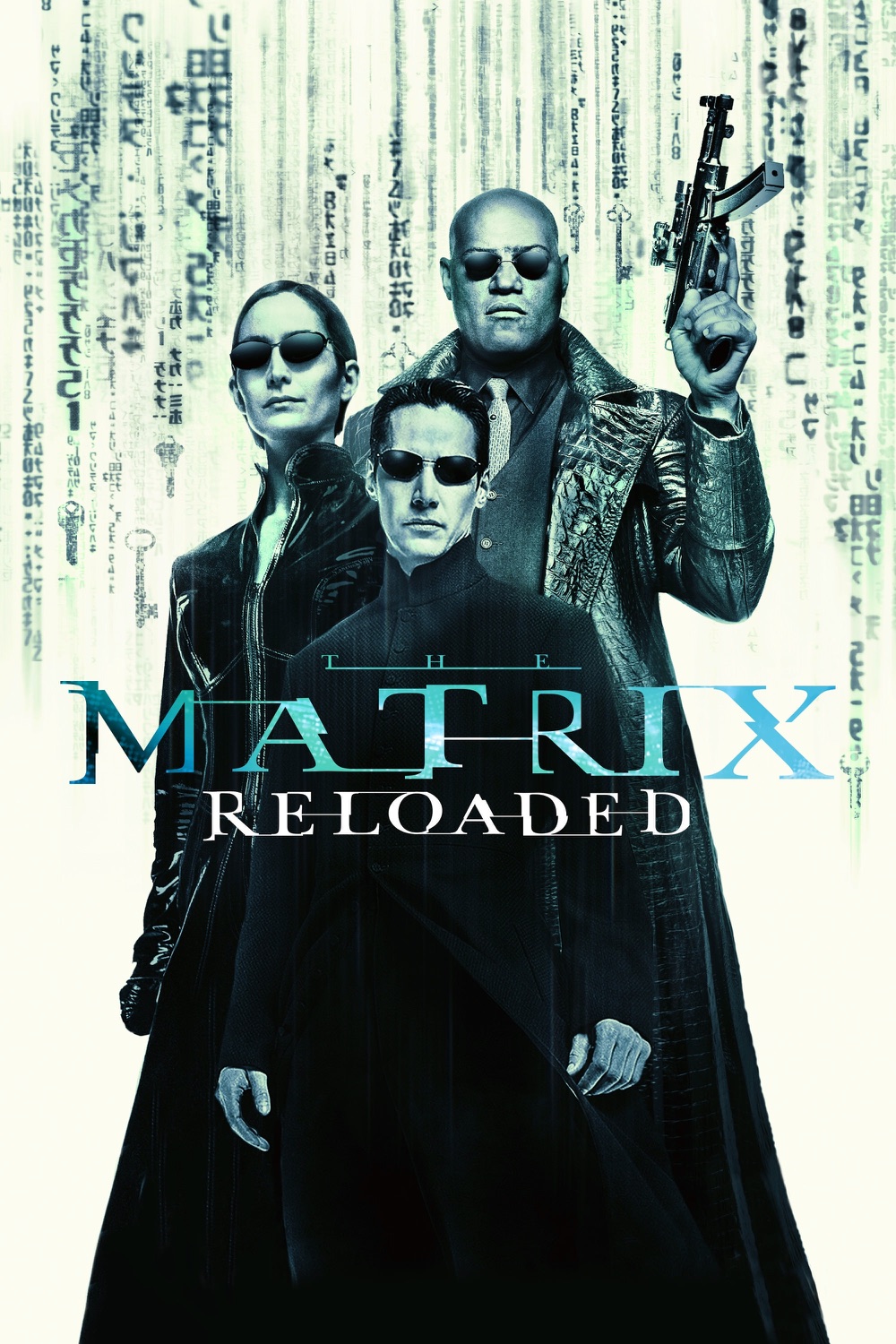
THE MATRIX RELOADED
黑客帝国2:重装上阵
自由意志进入系统架构:选择,究竟是出口,还是控制程序的一部分?
Free will enters the system architecture: is choice an exit, or part of the control program?
这一部,真正改变了什么?What did this film really change?
续集拆掉第一部的救世主确定性:预言可以是治理技术,反抗可以被系统预留,‘选择’甚至可能只是因果链被意识事后讲述的故事。
The sequel dismantles the certainty of the messiah story. Prophecy may be governance, resistance may be pre-allocated, and choice may be a story consciousness tells after causality has already moved.
可预测的选择仍然自由吗?
Is a predictable choice still free?
反抗能否成为系统的稳定机制?
Can resistance become a stabilizing mechanism?
爱是程序缺陷,还是超越因果的变量?
Is love a program error, or a variable beyond causality?
四条阅读路径Four paths into the film
这些不是隐藏彩蛋清单,而是可以被文本、画面与制作资料支持的讨论入口。
These are not lists of hidden trivia, but arguments grounded in text, image, and production history.
选择之前,决定是否已经发生?Has the decision happened before the choice?
Merovingian 强调因果,Oracle 强调理解选择,Architect 强调选择的统计功能。三者不是同一答案,而是一场关于主体性的辩论。
The Merovingian argues for causality, the Oracle for understanding choice, and the Architect for its statistical function. Together they stage a debate about agency rather than offering one answer.
异议的制度化The institutionalization of dissent
“The One”不再只是救世主,而是 Matrix 周期性处理异常的组成部分。系统最高明之处不是消灭反抗,而是为反抗安排位置。
The One becomes part of the Matrix's recurring way of processing anomalies. The most sophisticated system does not destroy resistance; it assigns resistance a place.
流亡者与机器伦理Exiles and machine ethics
Keymaker、Oracle 与 Merovingian 表明程序也有欲望、恐惧和生存策略。人类 / 机器的二元对立开始松动。
The Keymaker, Oracle, and Merovingian have desires, fears, and survival strategies. The human-machine binary begins to dissolve.
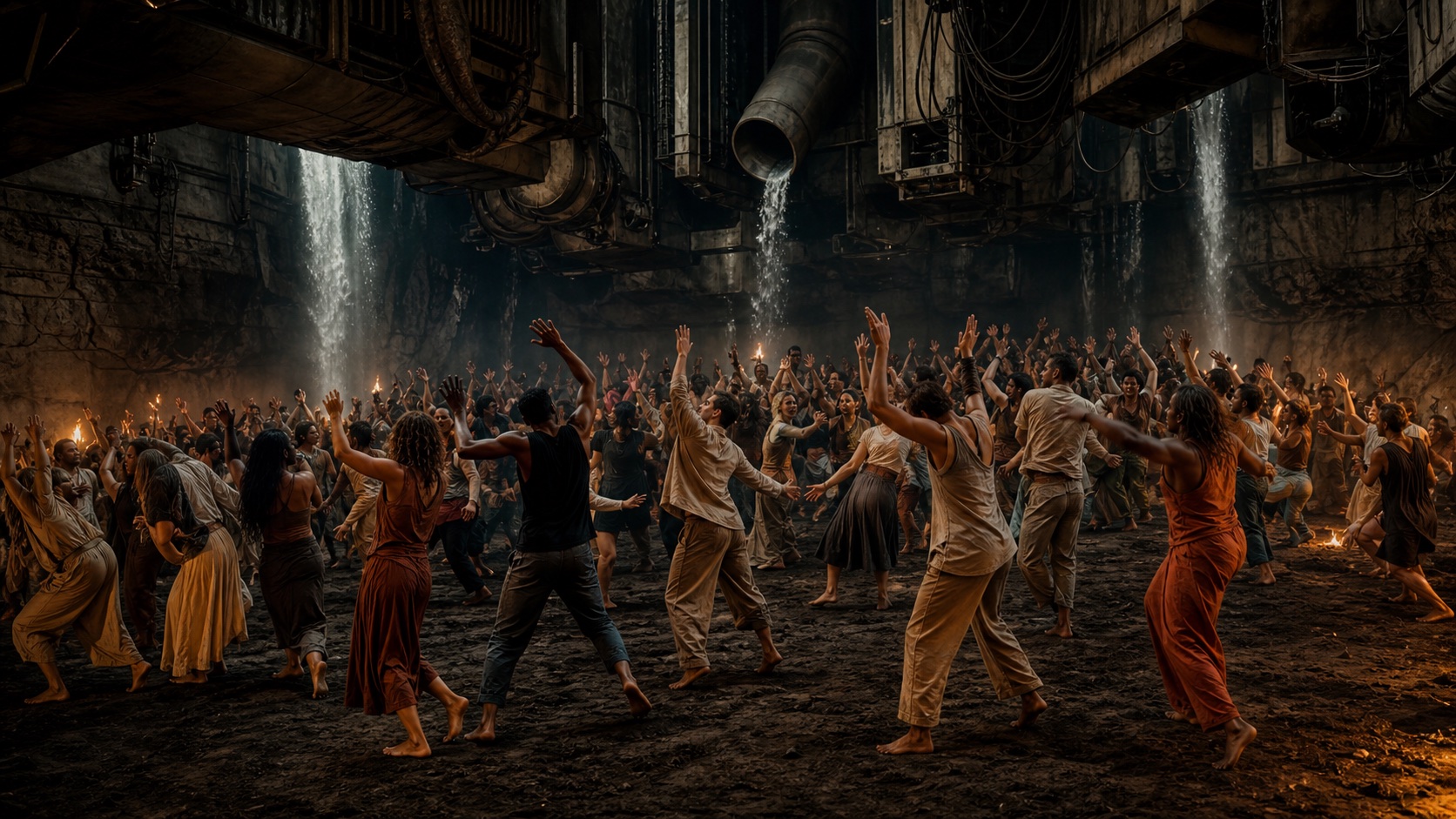
Zion 的舞蹈与真实触觉Zion's dance and the evidence of touch
备受争议的 Zion 段落用汗、水、土地与群体节奏,对照 Matrix 的洁净表面;它坚持真实世界首先是一种具身经验。
Sweat, water, earth, and collective rhythm oppose the Matrix's polished surface. The sequence insists that the real world is first an embodied experience.
经典台词:英文原句与中文译文Classic dialogue in the original English
英文保留影片原句;中文为本站语境译文。每条只截取最短、最有辨识度的句子。
English preserves the film wording; Chinese is an editorial translation. Only the shortest recognizable line is excerpted.
“Choice. The problem is choice.”“选择。问题就在选择。”
选择并未消失,而是被纳入系统设计。
Choice has not vanished; it has been absorbed into system design.
“You've already made it.”“你已经作出选择了。”
理解选择,可能比作出选择更晚发生。
Understanding a choice may arrive after the choice itself.
“Everything begins with choice.”“一切始于选择。”
这句话马上遭到因果论反驳,争论由此打开。
The line is immediately challenged by causality, opening the film's central argument.
哲学桥段:场景本身就是论证Philosophical scenes: the scene itself is an argument
系统最强大的时候,不是夺走选择,而是预先设计每个选择能够意味着什么。
A system is strongest not when it removes choice, but when it designs what every choice is allowed to mean.
Compatibilism · self-understanding
场景 / Oracle 的糖果
SCENE / The Oracle's candy
选择可能先发生,理解却仍然可以使人自由A choice may come first; understanding can still make it freer
如果决定已经作出,之后的理解还有什么意义?
If the decision has already been made, what can later understanding change?
Oracle 把自由从“无原因地决定”改写为“理解塑造我的原因”。我们很少凭空选择;自由更像一种回看、辨认并修正自身欲望的能力。决定有原因,不等于决定不是我的。
The Oracle reframes freedom as understanding the causes that shape me. We rarely choose from nowhere; freedom is the ability to recognize, evaluate, and revise desire. A choice with causes can still be mine.
危险在于:任何操控都可以声称受害者最终会理解。没有拒绝和退出的制度条件,所谓理解可能只是事后合理化。
This language can excuse manipulation by claiming the victim will understand later. Without a real right to refuse and exit, understanding may be only retrospective justification.
Determinism · desire
场景 / Merovingian 的因果演示
SCENE / The Merovingian's causal demonstration
解释欲望的机制,不能自动取消欲望的意义Explaining desire does not erase its meaning
当欲望可以被编码和触发,主体是否仍需负责?
If desire can be triggered and coded, is the subject still responsible?
知道蛋糕如何诱发身体反应,只解释了欲望的形成,没有回答人如何评价、抵抗或承担欲望。机制性解释与道德主体并不互相排斥;把人还原成按钮,恰恰是权力最喜欢的哲学。
A mechanism can explain how desire forms without deciding how a person evaluates, resists, or answers for it. Mechanistic explanation and moral agency need not cancel one another; reducing people to buttons is precisely the philosophy power prefers.
如果系统能精确预测并触发每个念头,责任概念可能确实需要重写,而不能只靠“内心仍然属于我”来保住。
If a system could predict and trigger every thought, responsibility might genuinely need revision. Inner ownership alone would not be enough.
Choice architecture · governance
场景 / Architect 的房间
SCENE / The Architect's room
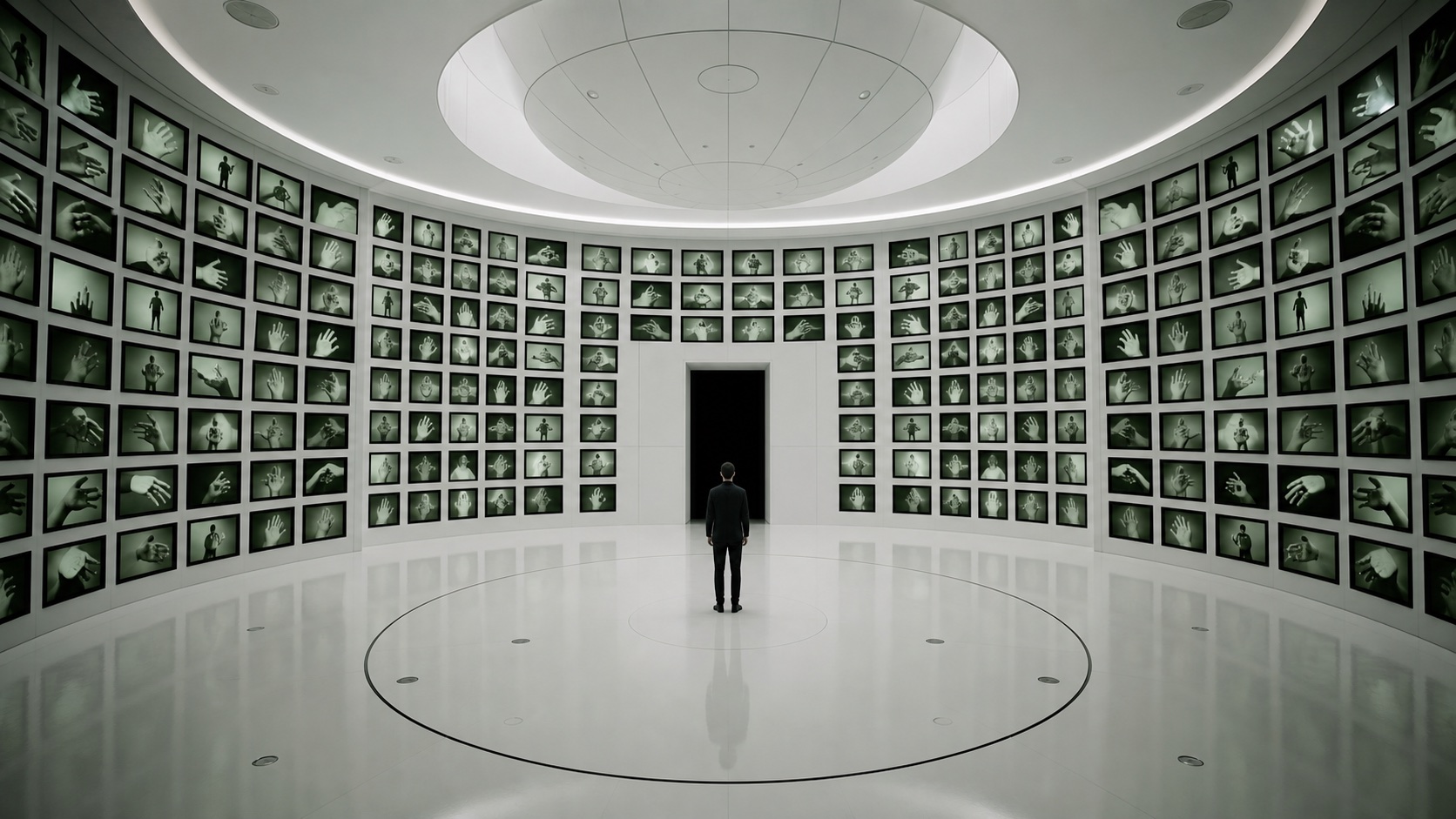
反抗不是系统之外,它可能是系统的维护程序Resistance may be a maintenance program inside the system
当异议被提前计算,反抗还可能真实吗?
Can resistance remain real when dissent has already been calculated?
多屏 Neo 把自由变成统计分布。Architect 的统治不是禁止选择,而是让每条路径都回到系统需要的周期。真正的反抗因此不是选一个未被预测的按钮,而是改变谁有权设计按钮与后果。
The many screen-Neos turn freedom into a distribution. The Architect governs by making every route return to a required cycle. Resistance must therefore change who designs the buttons and consequences, not merely select an unexpected button.
被预测不等于被制造。即使系统知道多数人会怎么选,具体行动仍能表达承诺、爱情与责任;可预测性本身不能取消自由。
Prediction is not creation. Even predictable actions can express love, responsibility, and commitment; predictability alone does not cancel freedom.
观后残像Afterimages
剧情已经结束,问题才刚开始。让这些并非官方剧照的原创重构,把电影里的选择带回你的生活。
The plot has ended; the questions have not. These original, non-film-still reconstructions return the movie's choices to ordinary life.
 AI CONCEPT / NOT A FILM STILL
身体知道一些抽象系统无法替你知道的事The body knows things an abstract system cannot know for you
汗、水、节奏和拥挤不是“低级感官”,而是共同体实际存在的证据:我们会疲惫,会受伤,也会彼此托住。
Sweat, water, rhythm, and crowding are not lesser senses. They are evidence of a community that tires, hurts, and holds one another up.
当生活越来越被屏幕和指标组织,你还在哪里与别人共享真实的时间、空间与脆弱?As screens and metrics organize more of life, where do you still share real time, space, and vulnerability with others?
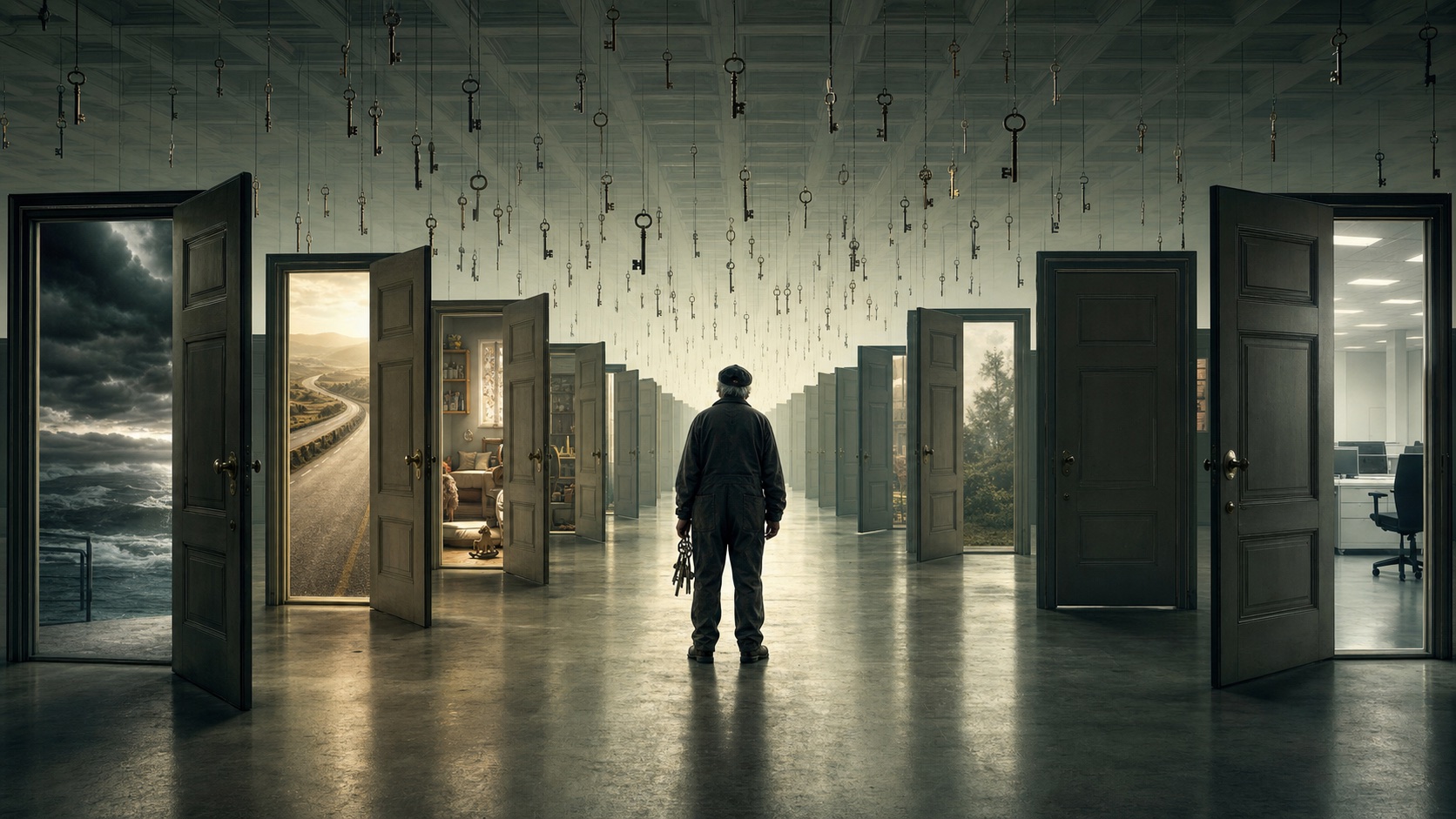 AI CONCEPT / NOT A FILM STILL
自由不只是拥有选项,更是拥有进入选项的钥匙Freedom is not only having options; it is having the keys
门看起来像个人选择,钥匙却揭示制度:谁能通过、谁被记录、谁承担风险,早在你伸手之前就被安排了。
Doors look like personal choices, while keys reveal institutions: access, surveillance, and risk are arranged before you reach for the handle.
你以为自己在自由选择的平台、职业或生活方式,通行规则是谁设计的?Who designed the passage rules for the platforms, careers, or lives you believe you freely choose?
四个关键场面Four key scenes
时间码为不同发行版本的大致位置,用于定位讨论,不替代完整观影。
Timecodes are approximate across releases. They locate discussion and do not replace watching the film.
Zion 集体舞Zion's collective dance
工业地下城里最有机的一场戏:肉身、节奏与共同体成为反控制的另一种语言。
The most organic scene in an industrial underground city: body, rhythm, and community become another language of resistance.
Burly BrawlBurly Brawl
大量 Smith 克隆把身份复制、数字替身与视觉奇观绑在一起,也暴露了当时全数字人类的技术边界。
Smith's mass replication binds identity, digital doubles, and spectacle together while exposing the limits of fully digital humans at the time.
高速公路追逐Freeway chase
制作团队在旧海军基地修建约两英里道路;长达约 11 分钟的段落把汽车、摩托、钢丝与虚拟摄影整合成连续空间。
A purpose-built road supports an eleven-minute synthesis of vehicles, wire work, virtual cinematography, and continuous spatial storytelling.
Architect 的房间The Architect's room
多屏幕不是装饰,而是可能性空间:每个 Neo 都像一条被模拟、比较、收束的路径。
The screens are a space of possibility: each Neo appears as a path already simulated, compared, and narrowed.
电影工业现场Inside the filmmaking
技术在 Matrix 里从不只是炫技:它负责把抽象思想变成观众能感到的时间、空间和身体。
Technique is never decoration here; it turns abstract thought into time, space, and bodies the audience can feel.
为高速公路段落搭建的专用道路规模,体现实体制作与数字延伸的混合方式。
The scale of the purpose-built freeway shows how physical production and digital extension were combined.
一个动作段落同时完成追逐、角色分线、空间叙事和世界规则展示。
One action sequence carries pursuit, split character lines, spatial narration, and world-building at once.
摄影师 Bill Pope 把黑暗当成构图材料;Matrix 的直线运动与 Zion 的有机运动形成语法差异。
Bill Pope treated darkness as compositional material; the Matrix moves in straight lines while Zion moves organically.